
Distressed property research is wider than foreclosure auctions or REO listings. Investors may also look at tax delinquent properties, probate situations, absentee owners, code violations, pre-foreclosure records, and other public signals. These sources can help users understand property context before they move into outreach or deeper checks. They can also show different types of owner or property distress before a home appears in a standard listing feed. Every source still needs verification, local record checks, and responsible communication.
The selected companies cover different sides of distressed-property research: foreclosure-first search, pre-foreclosure records, agent prospecting lists, motivated seller data, and tax delinquent or probate leads. ForeclosureHub stays first because it is built around foreclosure search, owner data, skip tracing, alerts, and property records. Landvoice and ArchAgent add pre-foreclosure prospecting depth. USLeadList brings broader motivated seller categories, while TaxLatesData adds a tax delinquent and public-record angle. Together, these sources give users several ways to research distressed property signals without relying on one lead list alone.
1. ForeclosureHub
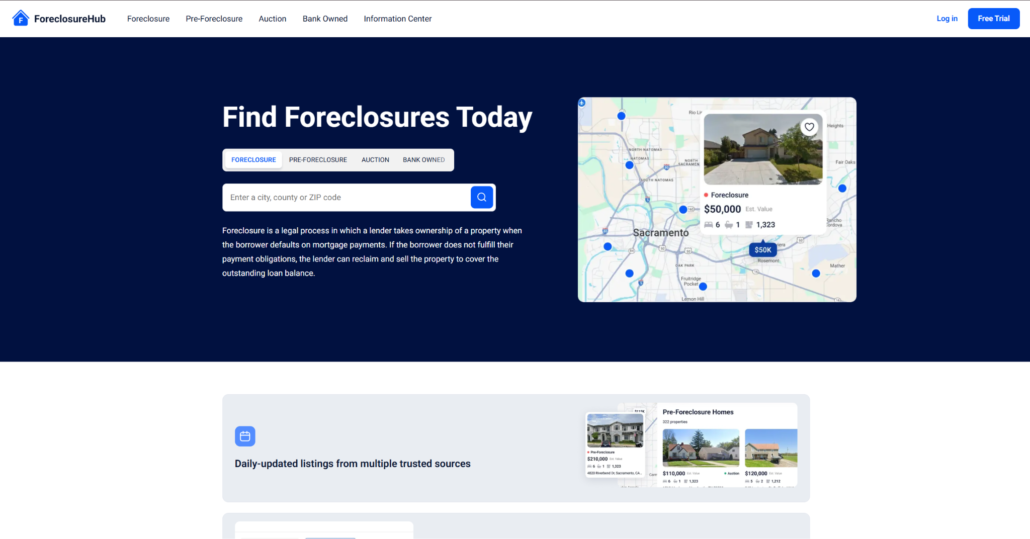
ForeclosureHub takes the first position because it gives users a foreclosure-first research base before they compare broader distressed-property lead lists. Users can search pre-foreclosure, foreclosure, bank-owned, and auction listings across the United States. The ForeclosureHub distressed property search tool brings distressed property data into a focused search system and helps users review properties with more context. The platform brings together owner details, mortgage records, tax data, transaction history, market information, and free skip tracing. Some county data may update faster than others, and there is no dedicated mobile app yet.
ForeclosureHub is strongest when the user needs property context before outreach, lead list building, or auction comparison. It should be used as a research source, not as legal or financial advice:
- Pre-foreclosure, foreclosure, bank-owned, and auction listings;
- Free skip tracing included with every property search;
- Owner, mortgage, tax, assessment, and transaction details;
- Market data for sale, rental, and comparable property checks;
- Saved searches and email alerts for matching properties.
ForeclosureHub gives users a cleaner first layer before they move into tax delinquent, probate, absentee owner, or other motivated seller lists.
Why it stands out
ForeclosureHub’s main strength is its foreclosure-specific focus. It gives users owner-level data and skip tracing inside the same search process. This makes it easier to understand a property before comparing broader distressed lead sources.
2. Landvoice
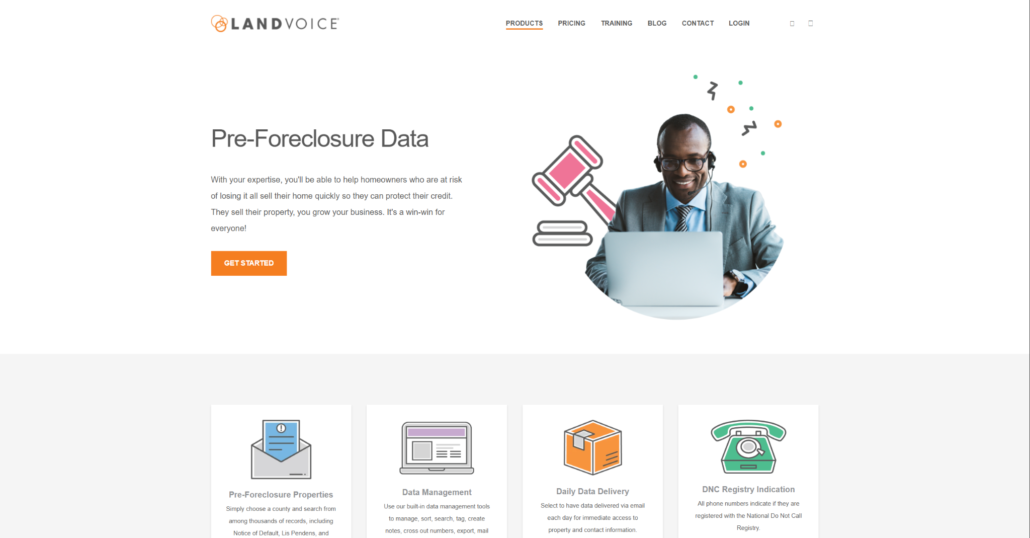
Landvoice is a real estate lead platform with pre-foreclosure data, expired listing data, FSBO data, and neighborhood search tools. Its pre-foreclosure records can include Notice of Default, Lis Pendens, and Notice of Trustee Sale. The platform is more of a prospecting source than a full foreclosure research system. That makes it relevant for agents and professionals who want recurring property signals in selected markets. Users still need to verify local status, ownership, and contact rules before acting on a lead.
Landvoice works well when the user wants lead signals for prospecting rather than deep property research. Its value depends on market coverage, county data, and how carefully each record is checked:
- Pre-foreclosure records;
- Notice of Default, Lis Pendens, and Notice of Trustee Sale data;
- FSBO and expired listing lead options;
- Neighborhood search for targeted prospecting;
- Useful source for agents tracking early property signals.
Landvoice can support prospecting, but it should be paired with record checks and responsible communication.
Core value
Landvoice’s strength is its mix of lead signals. It can help users watch more than one prospecting category in the same environment. It makes the most sense when the user wants early property signals instead of only listed foreclosure inventory.
3. ArchAgent
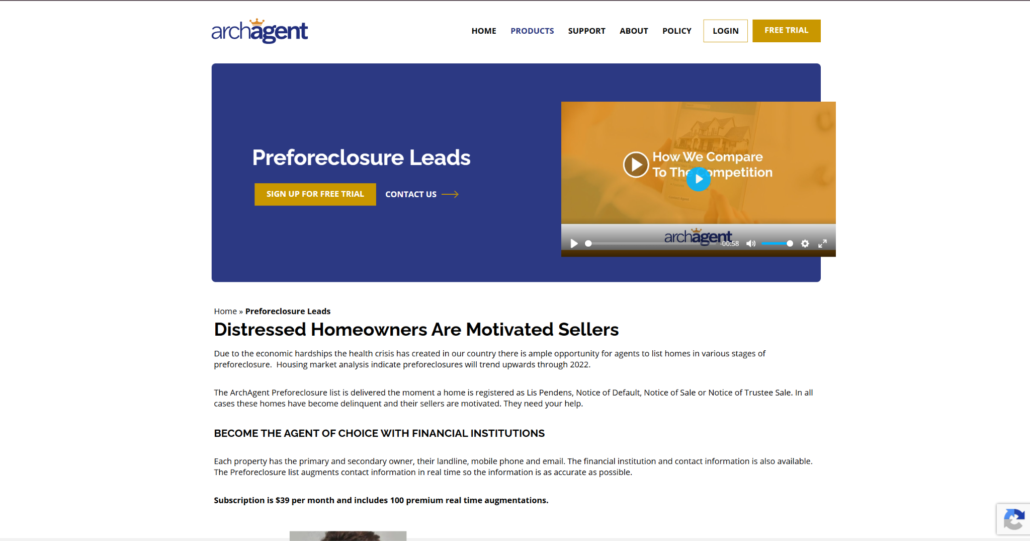
ArchAgent gives this list another preforeclosure-specific source, but with a stronger agent lead angle. Its preforeclosure list can be based on Lis Pendens, Notice of Default, Notice of Sale, and Notice of Trustee Sale. The platform is built for agents who want more direct preforeclosure prospecting lists. That makes it narrower than broader property data tools. Outreach to financially stressed homeowners still needs compliance, tact, and careful timing.
ArchAgent can work well when the user wants a focused preforeclosure source instead of a wide data platform. Users still need to confirm property status, local rules, and record accuracy before building any outreach around it:
- Preforeclosure lists for real estate agents;
- Lis Pendens and Notice of Default filters;
- Notice of Sale and Notice of Trustee Sale data;
- Focused source for preforeclosure prospecting;
- Better for contact-driven lead work than full market research.
ArchAgent can support preforeclosure outreach, but each lead should be verified before it becomes part of a campaign.
Core value
ArchAgent’s strength is focus. It narrows the search toward preforeclosure records instead of mixing too many property categories. It works best when the user already knows they want agent-style preforeclosure leads.
4. USLeadList
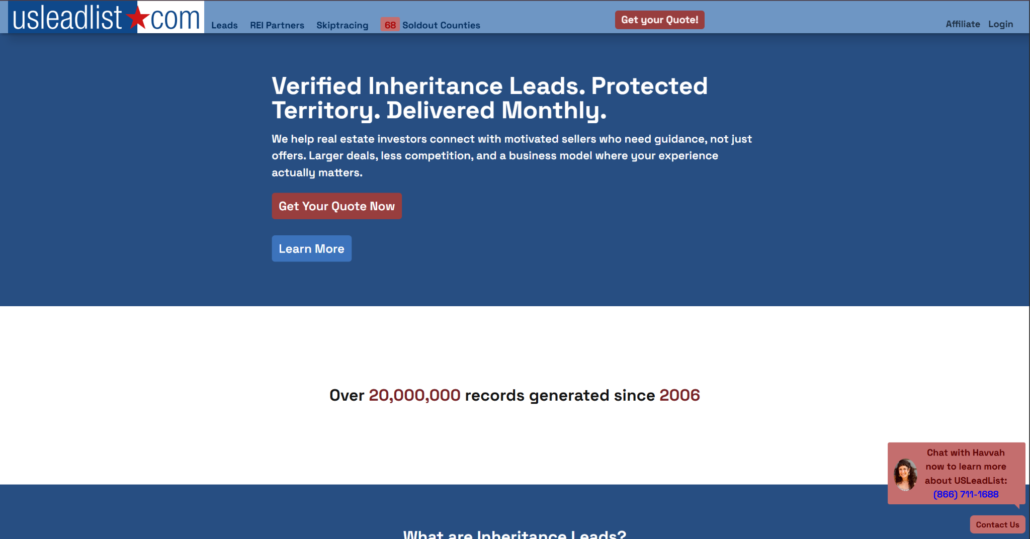
USLeadList broadens the article beyond standard foreclosure and preforeclosure records. It is tied to motivated seller data, probate and inheritance leads, absentee owner lists, land owners, and commercial real estate owners. That makes it more varied than a foreclosure-only feed. It can help investors test several lead categories when they do not want to stay inside one narrow property signal. Broader lists still need careful filtering because not every motivated seller category is connected to foreclosure.
USLeadList is useful when the investor wants wider lead angles. The data should be filtered carefully and checked against local records before outreach:
- Motivated seller lead lists;
- Probate and inheritance leads;
- Absentee owner data;
- Land owner and commercial owner lists;
- Useful source for testing broader distressed-property angles.
USLeadList can help users widen the search, but broad data should not replace property-level verification.
Where it helps most
USLeadList’s strength is variety. It can help investors explore several lead categories beyond foreclosure-only records. It works best when the user has a clear filtering strategy and knows which type of seller or property signal they want to study.
5. TaxLatesData
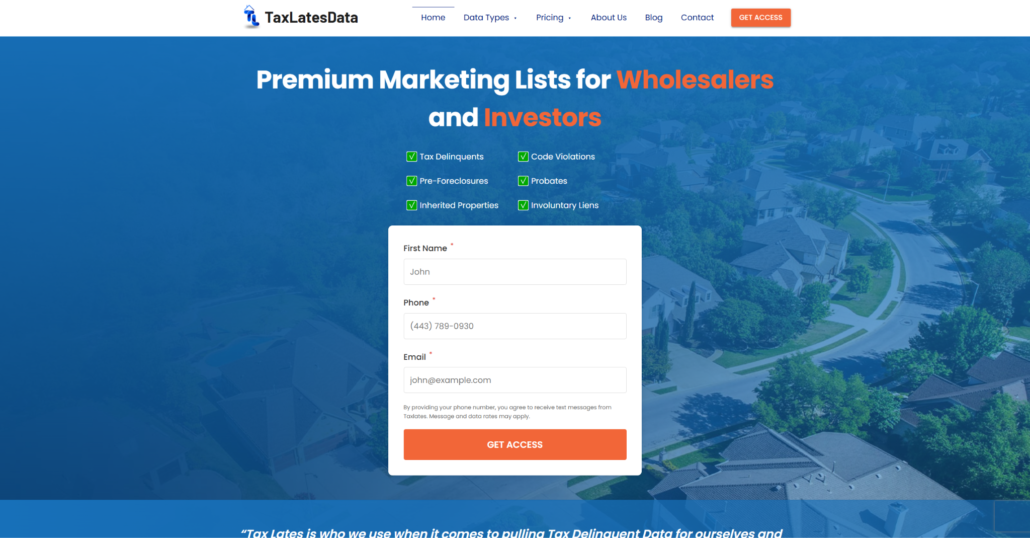
TaxLatesData gives the article a tax delinquent and niche public record angle. The platform aggregates county public records and provides access to tax delinquent properties, pre-foreclosures, probate leads, and code violations. These categories can point to distressed-property situations that do not always appear in ordinary listing portals. Tax delinquent, probate, and code violation leads need careful interpretation because the record alone does not tell the full story. TaxLatesData is most relevant when users want niche property data before outreach or deeper analysis.
TaxLatesData works best when the user wants public-record-based lead categories. These records can be valuable, but they are not ready-made decisions:
- Tax delinquent property leads;
- Pre-foreclosure records;
- Probate lead lists;
- Code violation leads;
- Public-record-based property data from counties.
TaxLatesData can add a different layer to distressed-property research, especially when users want signals beyond foreclosure filings alone.
Key research edge
TaxLatesData’s strength is its niche public-record focus. Tax delinquent, probate, and code violation data can reveal property situations that standard listing sites may miss. It is best used by users who know how to verify local records before outreach.
Best Fit by Lead Type
The best source depends on what kind of distressed-property signal the user wants.
ForeclosureHub is the best first choice for foreclosure-specific property context, owner data, skip tracing, alerts, and records. Landvoice and ArchAgent fit users who want pre-foreclosure or agent-style prospecting lists. USLeadList is better when the search expands into motivated sellers, absentee owners, probate, inheritance, land, or commercial owner leads. TaxLatesData fits users who want tax delinquent, pre-foreclosure, probate, and code violation records from public data.
Final Thoughts
This final Top 5 moves away from plain auction, REO, and foreclosure listing sources. ForeclosureHub gives users a cleaner starting point when the search needs foreclosure-specific context, owner data, skip tracing, alerts, and property records.
Landvoice and ArchAgent are more focused on pre-foreclosure prospecting, while USLeadList opens the door to motivated sellers, probate, inheritance, absentee owner, land, and commercial owner lists. TaxLatesData adds a public-record layer through tax delinquent properties, pre-foreclosures, probate leads, and code violations. The main thing is not to treat every distressed-property signal as the same kind of lead.
A tax delinquent record, a probate lead, and a pre-foreclosure filing all need different checks before they become useful. Users should verify ownership, local records, property status, and contact rules before acting on any list. None of these tools should be treated as legal or financial advice. The cleaner process starts with choosing the lead source by signal type, then checking the details before any outreach or deeper property research.